Surviving Every Crisis, Escaping None: Rethinking Resilience in Uganda
Surviving Every Crisis, Escaping None: Rethinking Resilience in Uganda
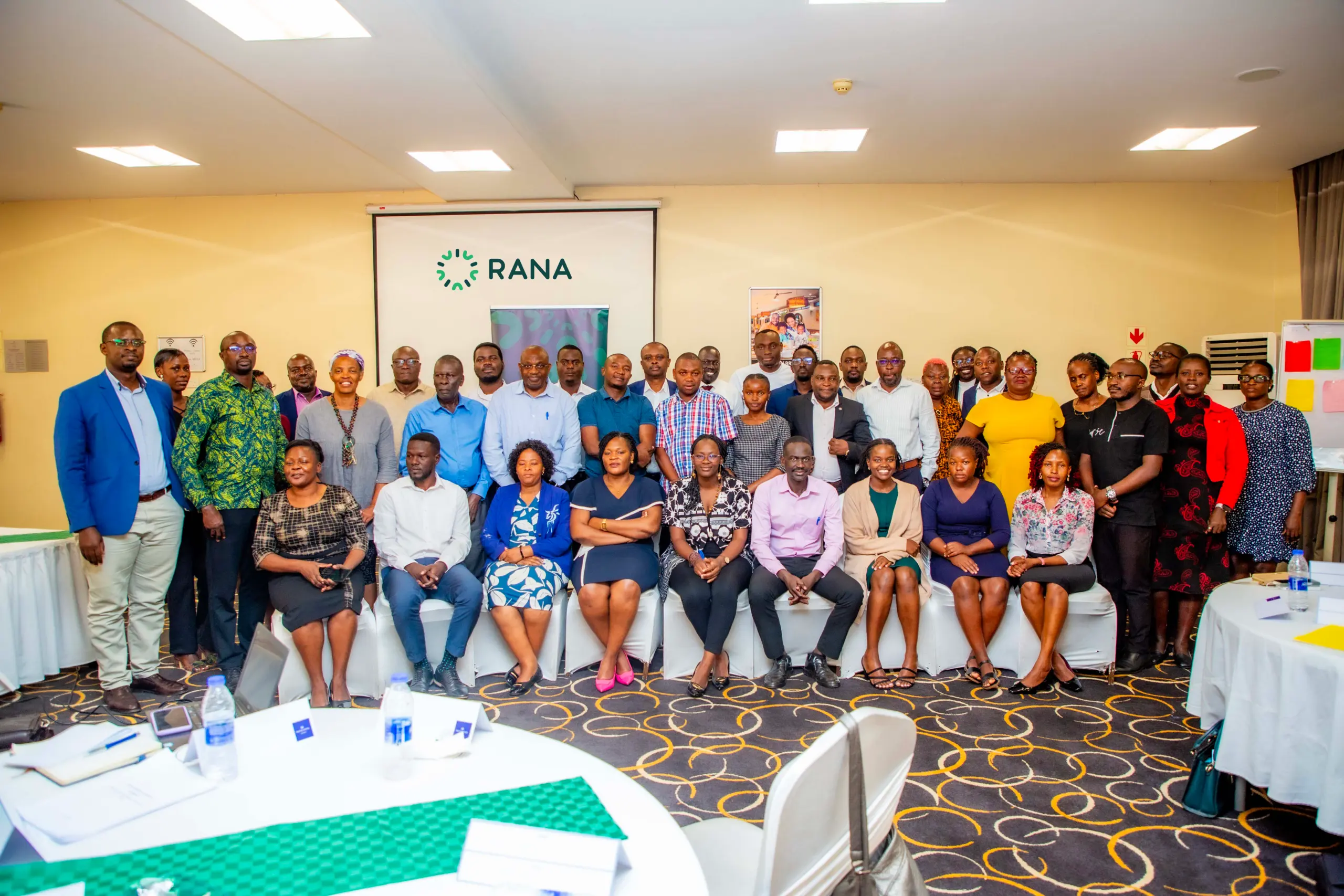
Resilience is often defined as the ability to withstand and recover from shocks. Yet the findings from Resilience Action Network Africa’s (RANA) Resilience Community Dialogues challenge us to ask deeper questions: are communities resilient because they have no other option, are our systems working effectively to build and support resilience? These questions guided our discussions during the dialogue validation workshop held on 11-12 August 2026 in Kampala, where 45 RANA partners and stakeholders gathered to reflect on insights from community dialogues conducted in Moroto, Terego, Bududa, and Bwaise. The findings pointed to a recurring pattern of strong community coping capacities existing alongside persistent structural and institutional vulnerabilities.
The four diverse contexts selected for the dialogue reflected different ways resilience is shaped by risk, vulnerability, and local realities. Moroto provided insights into resilience among pastoralist communities facing chronic drought and historical underinvestment; Bududa explored resilience in the context of recurring landslides and the complex links between land, livelihoods, identity, and relocation; Bwaise offered an urban perspective on how flooding, poor sanitation, inadequate housing, and limited municipal investment affect resilience; while Terego examined resilience within a refugee-hosting setting shaped by displacement, humanitarian assistance, and pressure on shared services. Together, these sites provided a rich and representative picture of resilience across Uganda’s diverse socio-economic and environmental landscapes
The most powerful moment of the validation was seeing the communities behind the data represented in the room. The community representatives shared their lived experiences, challenged assumptions, and added depth to the evidence gathered during the study. Their contributions reinforced that resilience is shaped by the realities, aspirations, and daily struggles of people living with multiple and overlapping risks.
Key insights from the field
- Resilience masking system weaknesses: Communities consistently find ways to cope with droughts, floods, disease outbreaks, and other shocks, often relying on family networks, community groups, and informal support systems. While this demonstrates remarkable resilience, it can also hide weaknesses in governance, public services, financing systems, and preparedness mechanisms, allowing systemic problems to persist unaddressed.
- The resilience trap: Many communities are trapped in a cycle of repeated crises and recovery. After each shock, short-term interventions help people survive, but because the structural drivers of vulnerability remain unchanged, communities face the same risks again and again. Resilience therefore becomes about enduring hardship rather than escaping it.
- Response over prevention: Current resilience investments tend to prioritize emergency response and humanitarian assistance over prevention and preparedness. As a result, resources are often mobilized after disasters occur, rather than being used to reduce risks and strengthen resilience before crises emerge.
- Local actors, limited power: Local governments and community institutions are often the first responders to crises and are closest to affected populations. However, they frequently lack the resources, authority, and financial capacity needed to make meaningful decisions and implement long-term resilience solutions.
- The warning-action gap: Although early warning systems often provide valuable risk information, communities are not always able to act on these warnings. Limited finances, inadequate infrastructure, and weak institutional support mean that knowing about a risk does not necessarily translate into effective preparedness or risk reduction.
- Governance and accountability challenges: Weak coordination among institutions, fragmented responsibilities, and limited accountability mechanisms continue to undermine resilience efforts. At the same time, communities often have little influence over decisions that directly affect their lives, reducing the effectiveness and legitimacy of resilience interventions.
- Inclusion as a resilience imperative: Resilience is experienced differently across social groups. Women, youth, persons with disabilities, refugees, and other marginalized populations often face greater exposure to risks and fewer opportunities to influence decisions. Ensuring their meaningful participation is therefore essential for building equitable and effective resilience systems.
- Communities as resilience assets: Communities are not only beneficiaries of resilience programs but also key drivers of resilience themselves. Savings groups, local leadership structures, indigenous knowledge systems, youth initiatives, and social networks provide critical support during crises and can serve as foundations for long-term resilience building.
While the study revealed significant challenges, it also highlighted opportunities to break cycles of vulnerability and build lasting resilience. The following recommendations outline key actions needed to move beyond coping and adaptation toward a more transformational resilience agenda.
- Make preparedness a development priority: Embed preparedness into routine development planning and investment by strengthening local institutions, services, infrastructure, and risk management systems before crises occur. Building resilience before disasters strike is more effective and sustainable than repeatedly responding to emergencies.
- Shift from coping to transformation: Move beyond interventions that help communities survive shocks and invest in transforming the systems, policies, financing mechanisms, and power structures that drive vulnerability. Lasting resilience will only be achieved by addressing root causes, not just symptoms.
- Redefine how resilience is measured: Measure resilience by the extent to which vulnerability is reduced and risks are proactively managed, rather than by how often communities recover from recurring crises. Success should be reflected in stronger systems and reduced dependence on external support.
- Strengthen community-led resilience: Place decision-making authority, resources, and financing closer to communities, and invest in local institutions and community organisations. Empowering communities to lead resilience efforts fosters locally relevant solutions, stronger ownership, and more sustainable outcomes.
The RANA Resilience Community Dialogues highlights a powerful but often overlooked reality: resilience is not built in moments of crisis alone, but through the strength of systems, institutions, and relationships that shape everyday life. Across the diverse contexts of Moroto, Bududa, Bwaise, and Terego, communities continue to navigate multiple and overlapping risks, demonstrating remarkable agency, innovation, and determination in the face of uncertainty. At the same time, the study reveals that resilience cannot be sustained by community coping mechanisms alone. When vulnerabilities persist and shocks repeatedly disrupt lives and livelihoods, resilience efforts must go beyond responding to immediate needs and focus on addressing the underlying factors that drive risk and exclusion.
The lessons emerging from the community dialogues provide an important opportunity to rethink how resilience is understood, measured, and supported.
Tags
- climate change
- resilience
- Resilience Action Network Africa
- Uganda