Reflecting on Uganda’s Journey with RANA
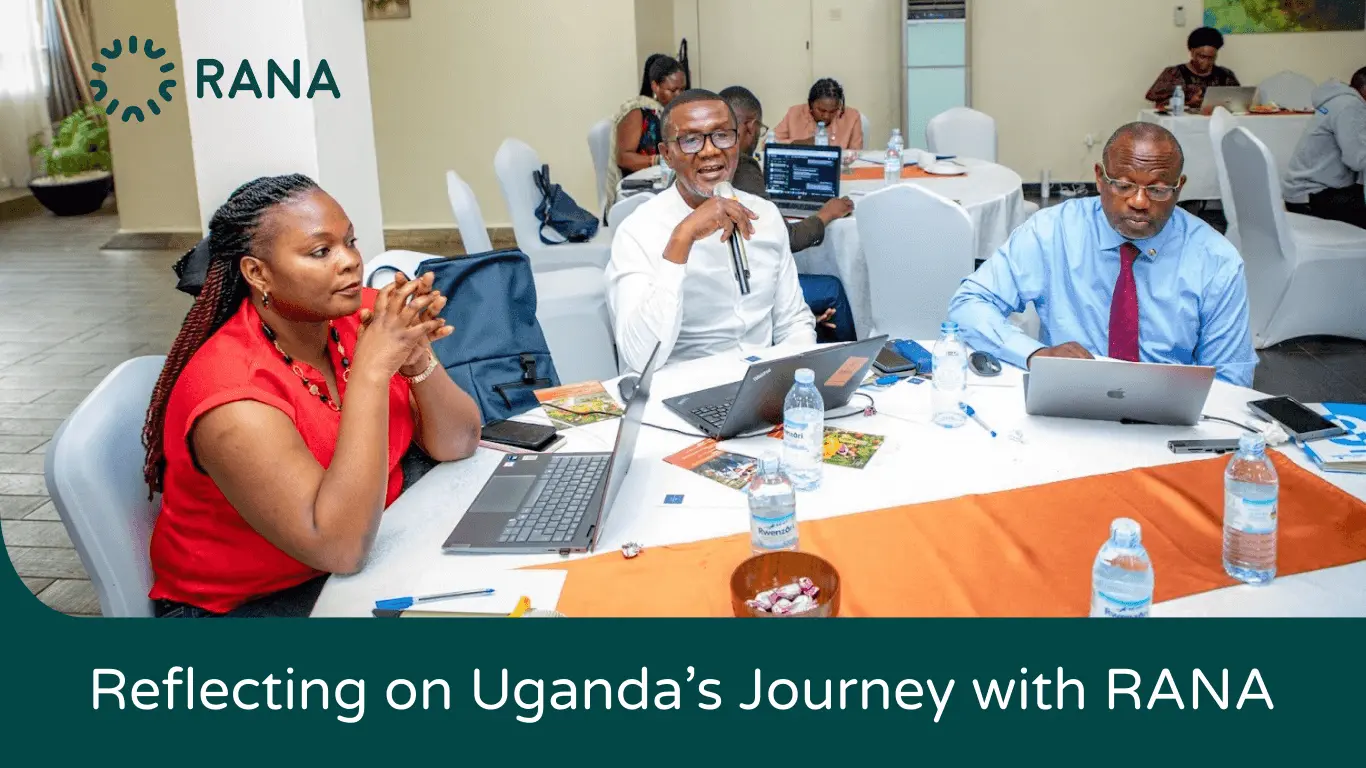
Launched in September 2024, RANA’s Uganda Working Group quickly established itself as a lead convenor of partners aligned on the vision of advancing the resilience agenda in Uganda through collaborative, local action. RANA Uganda Working Group’s role has not only been welcomed by partners, it has been hailed as the shift that organising CSOs needed in this era of multiple, converging needs.
The Uganda Working Group convened by AHAKI, under the stewardship of a dedicated team of steering committee partners, has played an instrumental role in galvanising advocates across different sectors to meet moments such as the ongoing mpox outbreak and the sudden shifts in health financing landscape. In a recent working group meeting of Nov. 20, 2025, there was a reaffirmation of commitment to drive Uganda’s and Africa’s resilience by adoption of a joint work plan that will see members undertake strategic networked advocacy on priority issues, leveraging the growing body of evidence from its membership and new evidence. The joint plan will build on the encouraging progress of 2025, which included enhanced civil society representation in government policy making and implementation process especially in pandemic prevention, preparedness, and response (pandemic PPR) initiatives, capacity-building, policy and advocacy on health financing and local manufacturing, and community engagement on pandemic PPR.
By mapping partners, identifying strengths, and centering advocacy around national priorities, RANA has built a strong country architecture in Uganda for strategic engagement with policymakers, allies, and influencers. The joint efforts have amplified Uganda’s civil society voice on pandemic PPR beyond national borders. Initiatives such as Afya Na Haki’s vaccine equity campaign and AHF’s support during Pandemic Agreement discussions were pivotal in strengthening this unified approach, effectively linking grassroots realities to global advocacy platforms.
The mpox outbreak highlighted the indispensable role of organised civil society partners. RANA partners from the Uganda working group connected the Ministry of Health to diverse constituencies including commercial sex workers, persons with disabilities, truck drivers, and youth networks, among others, to ensure effective risk communication and equitable access to services, demonstrating the critical value of civil society in safeguarding communities during public health emergencies.
RANA partners, including AHF–Uganda Cares and HEPS Uganda, have been at the forefront of Uganda’s Pandemic Agreement negotiations, particularly on pathogen access and benefit sharing (PABS). Participation in high-level forums such as the World Global Production Forum and ICASA underscores RANA’s growing influence in shaping Africa’s health financing and global health architecture. Engagements with the African Union, Africa CDC, and the East African Community further highlight RANA’s role in linking regional progress to national implementation, ensuring that commitments translate into tangible impact and resilience at the country level.
Key milestones
RANA’s Uganda Working Group has recorded significant progress across multiple thematic areas:
- Civil society representation: Expanded CSO participation in key decision-making spaces, including the Public Health Emergency Technical Working Group and the National Technical and Environmental Accord.
- Health security financing: Through the Uganda Health Security Forum — a coalition of CSOs, academia, and media — RANA partners pushed for prioritisation of health security financing. Collaboration with the Ministry of Finance secured approximately UGX 49 million, bridging gaps left by funding cuts.
- Knowledge sharing and advocacy: Webinars hosted by RANA, AHF–Uganda Cares, HEPs Uganda, and Afya Na Ahaki provided platforms for centering CSOs in Africa’s pandemic preparedness negotiations. Position papers on sustainable financing and policy advocacy were developed and disseminated strengthening the capacity of partners and key stakeholders.
- Community awareness: Awareness efforts remained active across diverse constituencies, ensuring responsiveness during outbreaks and strengthening resilience at the grassroots level.
Our journey over the past year demonstrates the transformative power of civil society when mobilised, capacitated, and connected to both national and global advocacy. By uniting organisations, amplifying community voices, and influencing policy spaces, RANA has laid a strong foundation for Uganda’s resilience agenda.
Civil society is not just a participant in the resilience agenda: it is a driving force.
