Insights from Community Resilience Conversations
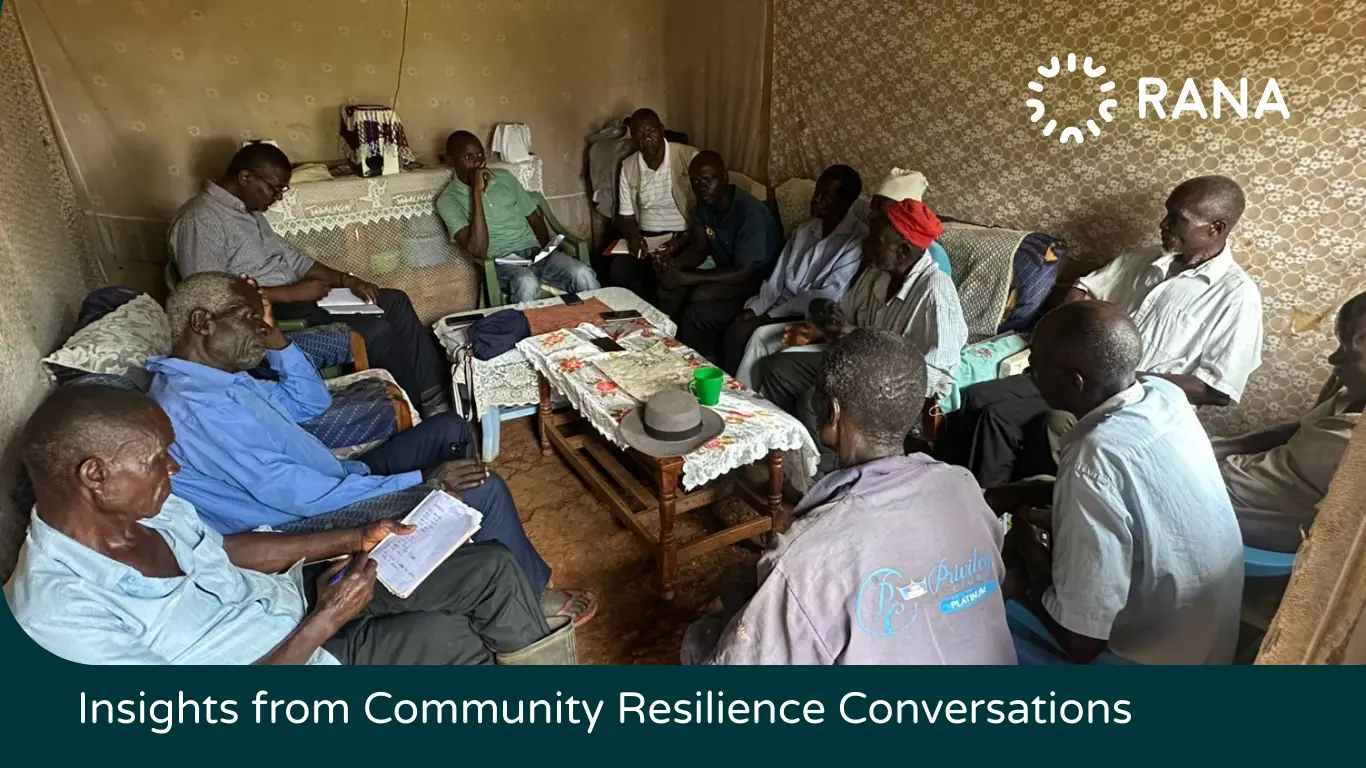
Living up to its vision of being a truly community-facing organization, Resilience Action Network Africa (RANA) continues to ground its mandate and legitimacy in the voices of those living on the frontlines of climate change.
Working with a growing network of community partners, RANA teams have travelled across diverse landscapes; from pastoralist regions such as Turkana in Kenya and Karamoja in Uganda, to coastal communities in Kilifi, to urban and peri-urban communities in Durban and Cape Town in South Africa. Similar engagements have taken place in rural farming communities and informal urban settlements across Sierra Leone, Kenya, and Uganda.
These engagements are anchored in a simple but powerful principle: listening first. By hearing directly from communities about their lived experiences of changing climate patterns and the cascading challenges that accompany them, RANA is helping surface frontline knowledge on how resilience is being tested and reshaped.
Elevating these voices is central to RANA’s mission. Engaging those most affected by climate change is the surest path to building a strong foundation for citizen-driven advocacy and catalysing the systems transformation needed to strengthen resilience across African societies facing converging and reinforcing crises.
Headline Insights from Community Resilience Conversations
- Climate Shocks Are Triggering Cascading Crises
Across pastoral, farming, coastal, and urban communities, climate shocks are no longer isolated events. Drought, erratic rainfall, and flooding are driving cascading impacts – fueling livelihood losses, public health risks, and social tensions. In places like Isiolo County in Kenya, drought-related livestock losses have intensified resource competition and insecurity, while flooding in Durban has been linked to increased disease risks. - Early Warning Without Early Action
Communities consistently report that existing early warning systems fail to translate into timely local action. Alerts often arrive late, lack clarity, or are not communicated in ways farmers and pastoralists can use to guide seasonal decisions. - Communities Are the First Responders
When crises strike, local solidarity systems—faith groups, neighbours, and community networks—mobilise assistance long before formal disaster response mechanisms reach affected populations. - Local Knowledge Is Driving Adaptation
Communities are already adapting. Farmers in Siaya County are reviving indigenous crops that are more resilient to drought and better suited to local ecological conditions, strengthening food sovereignty while reducing dependence on costly inputs. - Partnership with Communities Strengthens Resilience
Where governments work with communities, resilience improves. Livestock insurance partnerships in Isiolo County demonstrate how aligning policy tools with community realities can help protect livelihoods from climate shocks. - Resilience Requires Systems That Connect Local Realities to Policy
The insights point to an urgent need for integrated resilience systems that link communities, governments, and development actors—combining early warning, inclusive governance, and community-led adaptation to address increasingly complex climate and health shocks.
Tags
- climate change
- preparedness
- resilience
- Resilience Action Network Africa